RPX TOOLKIT
Same scene.
Different story.
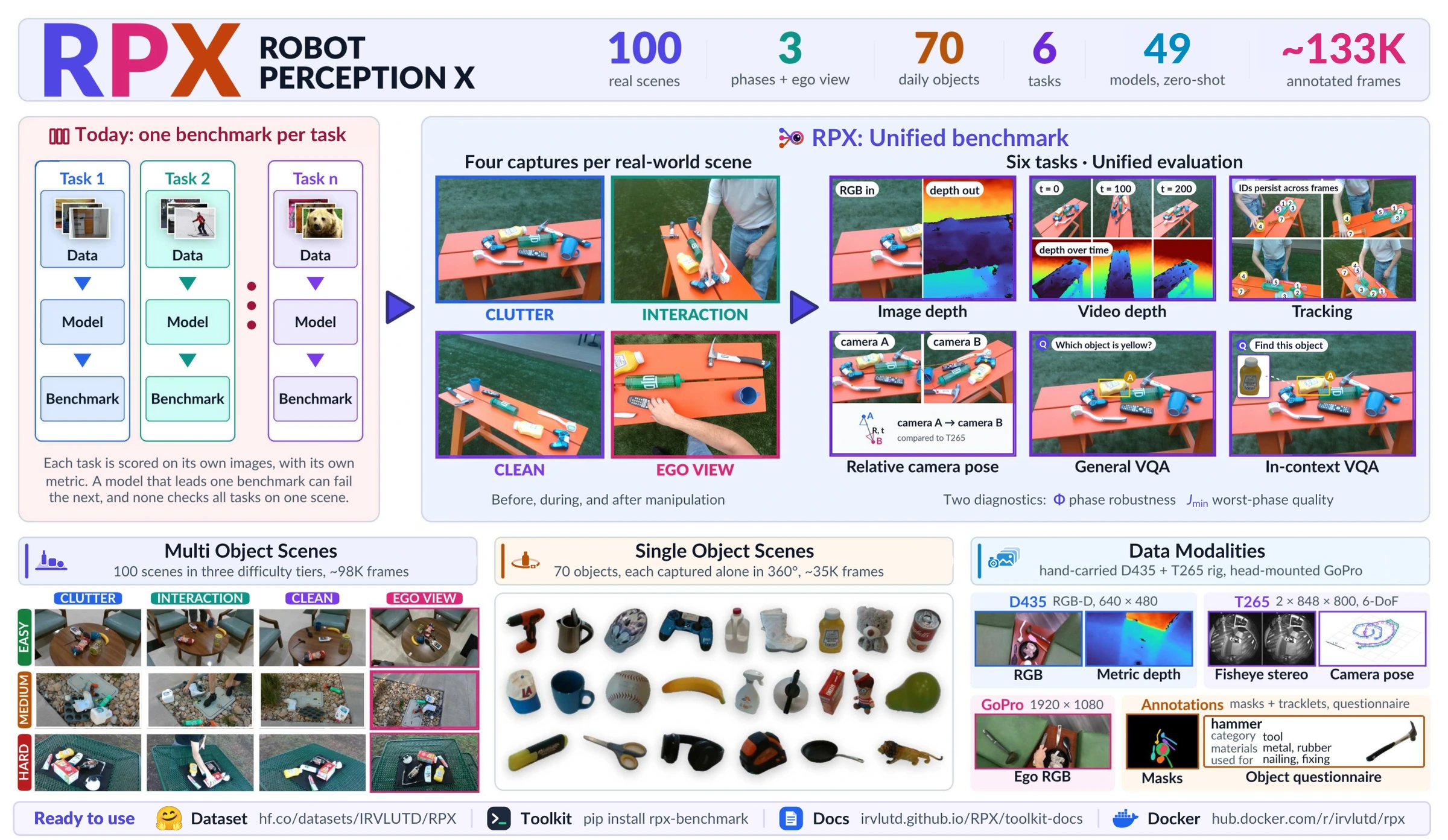
Score a perception model on real scenes recorded before, during and after manipulation, and find the phase where it breaks.
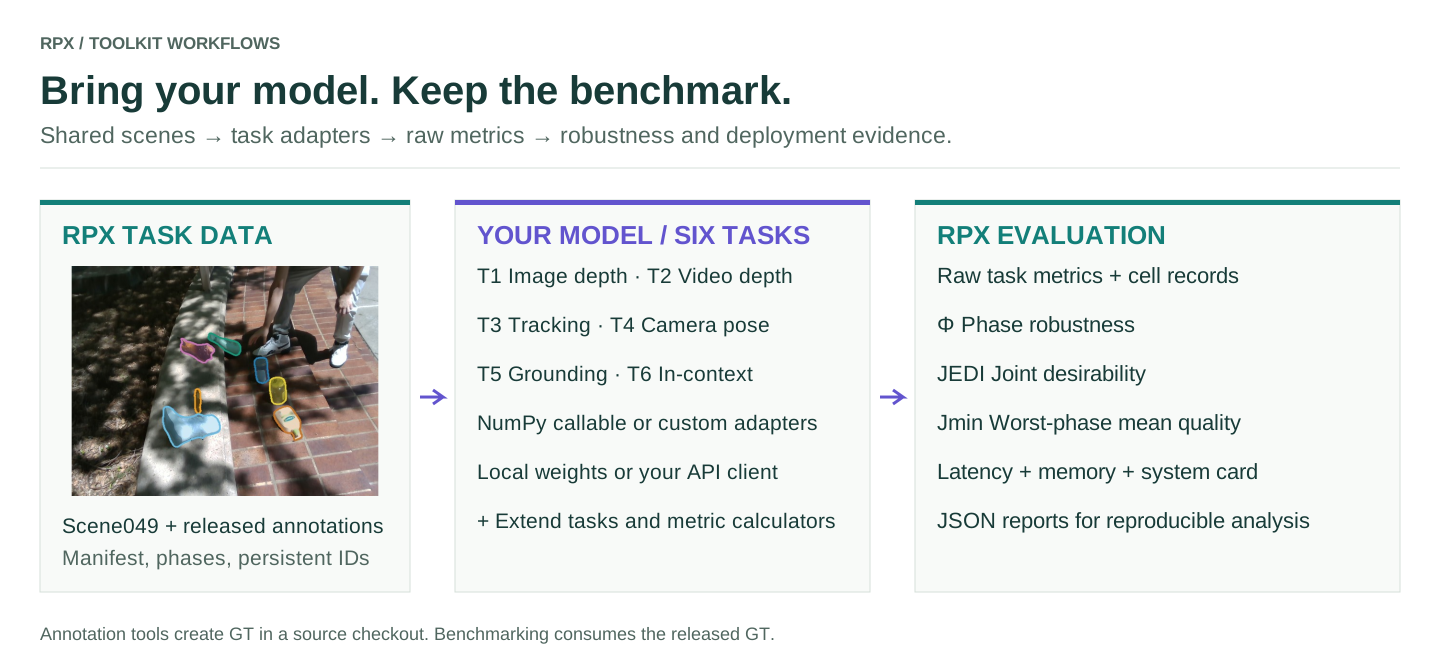
RPX covers the paper's six tasks with its protocol, metrics and robustness scores. You write one function that calls your model or API; the toolkit downloads the data, runs the split and computes the metrics.
Try it now
pip install 'rpx-benchmark[hub,schemas]'
python -m rpx_benchmark.examples.benchmark_tasks --task all --smoke --output rpx-check
This runs all six evaluators on synthetic inputs in a few seconds, on CPU, without downloading anything. To score your own model on real scenes, follow Get started.
What the paper found
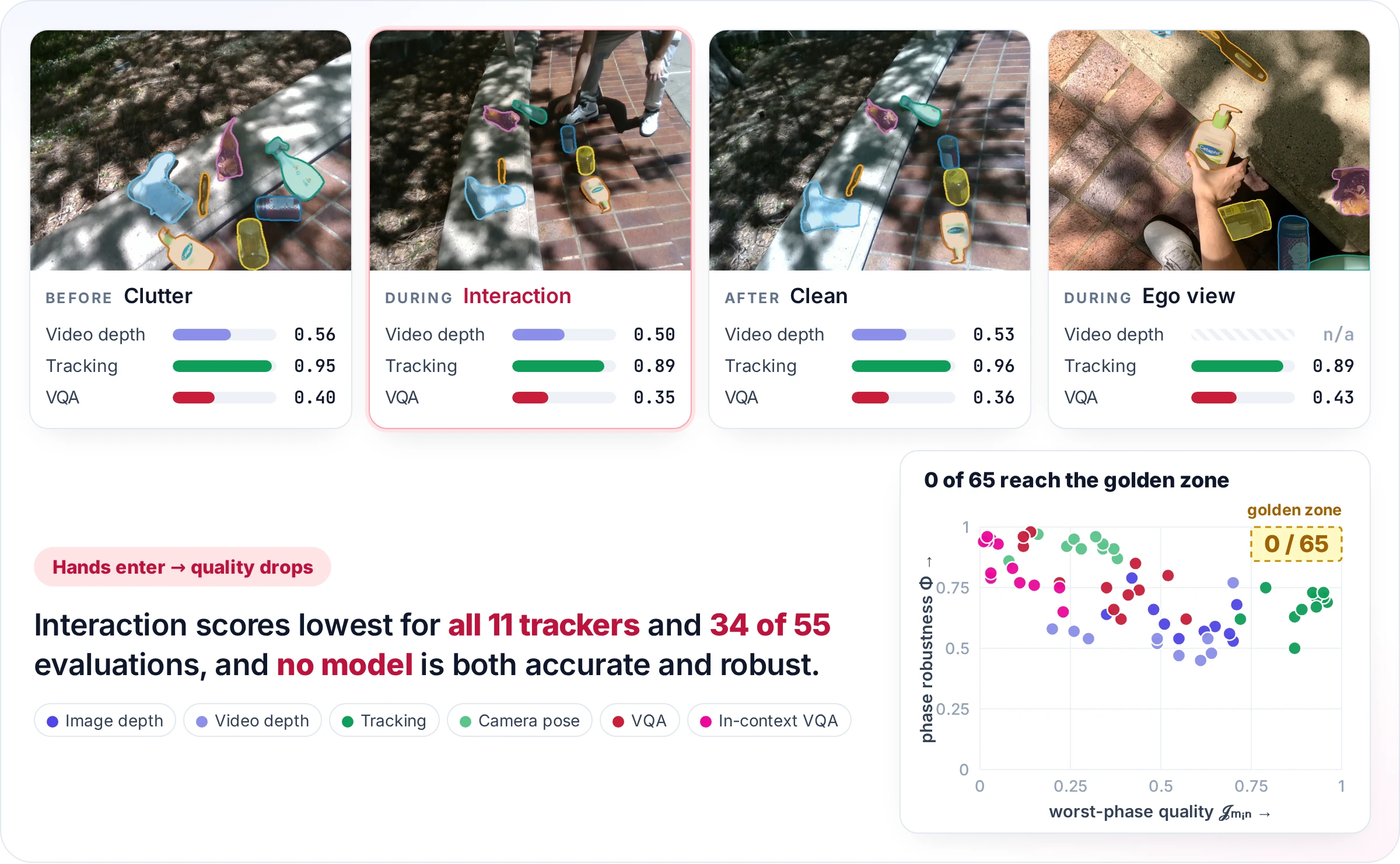
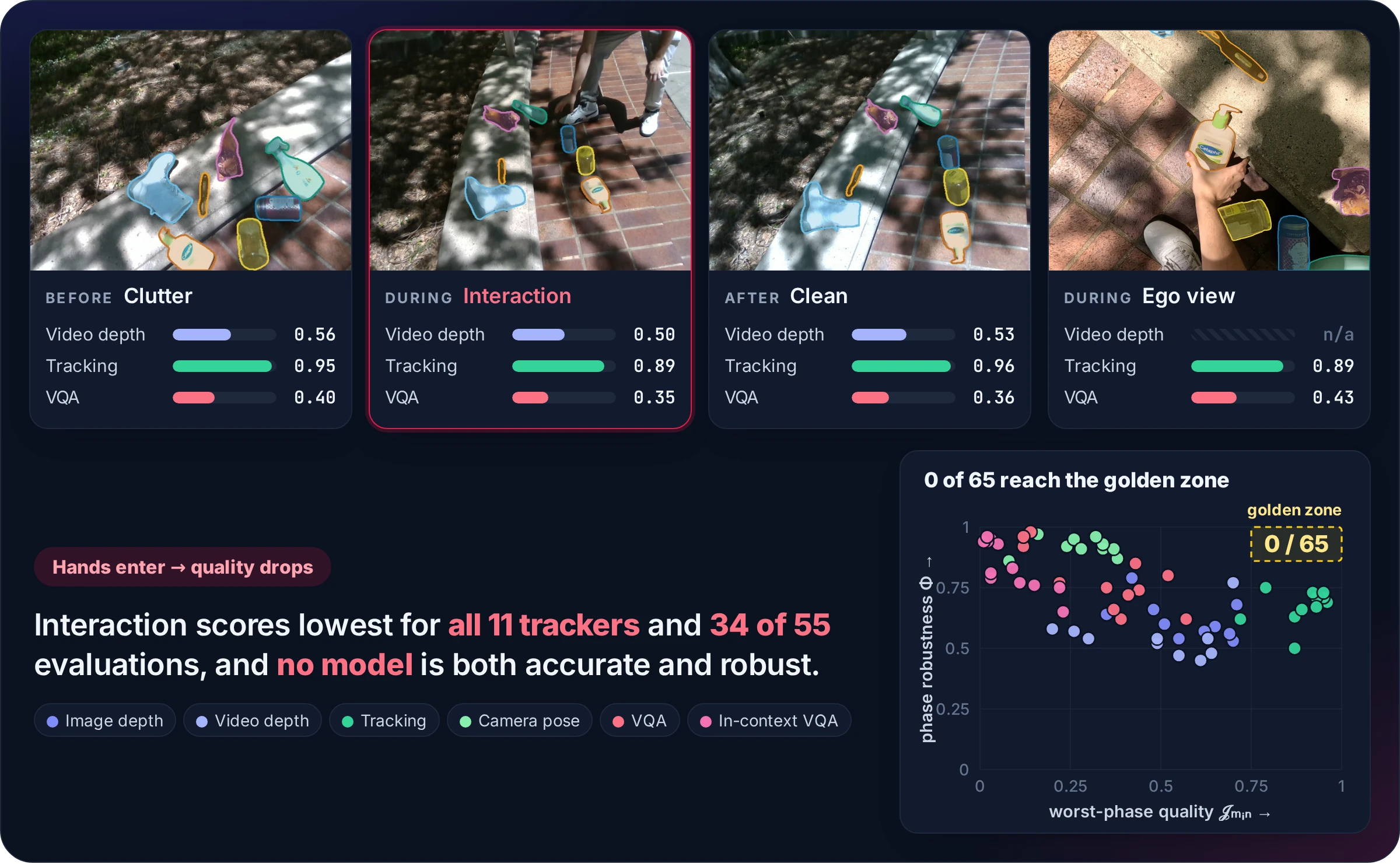
Each scene is recorded before manipulation (Clutter), while hands move objects (Interaction) and afterwards (Clean), plus an egocentric view of the interaction. Mean quality drops during Interaction, and none of the 65 evaluations is both accurate and robust.
How the toolkit fits together
The six tasks
| Task | Input | Evaluation |
|---|---|---|
| T1 Image depth | RGB image | Metric-depth accuracy |
| T2 Video depth | RGB sequence | Depth accuracy and temporal consistency |
| T3 Object tracking | Video and initialization | Multi-object tracking and identity consistency |
| T4 Relative camera pose | Image pairs | Relative-pose errors and threshold AUC |
| T5 VQA | Image and text question | Localization accuracy |
| T6 In-context VQA | Image, question, and reference image | Reference-conditioned localization |
T5 and T6 share the visual-grounding evaluator but have separate protocols. The toolkit also has runners for detection, segmentation, sparse depth and keypoint matching; available_tasks() lists them all.
What each capture contains
Each exocentric capture has RGB, metric depth, instance masks, calibrated fisheye stereo and camera pose.
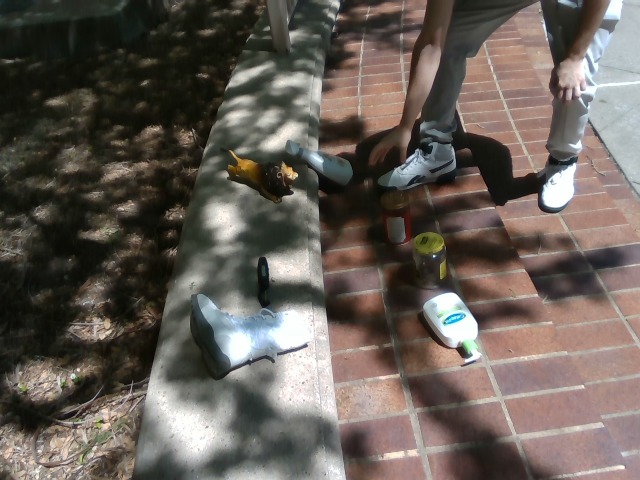
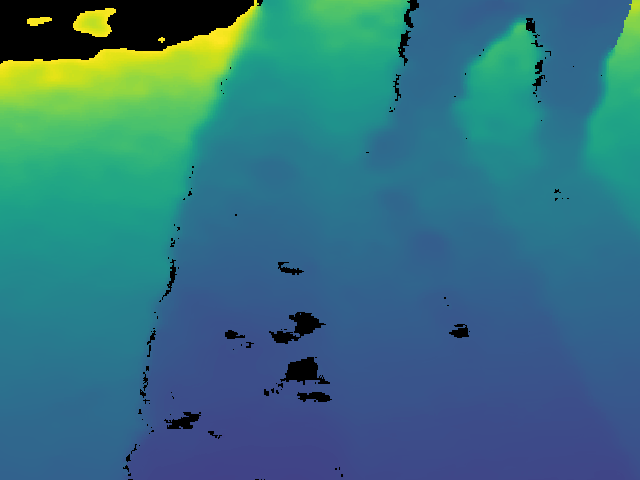
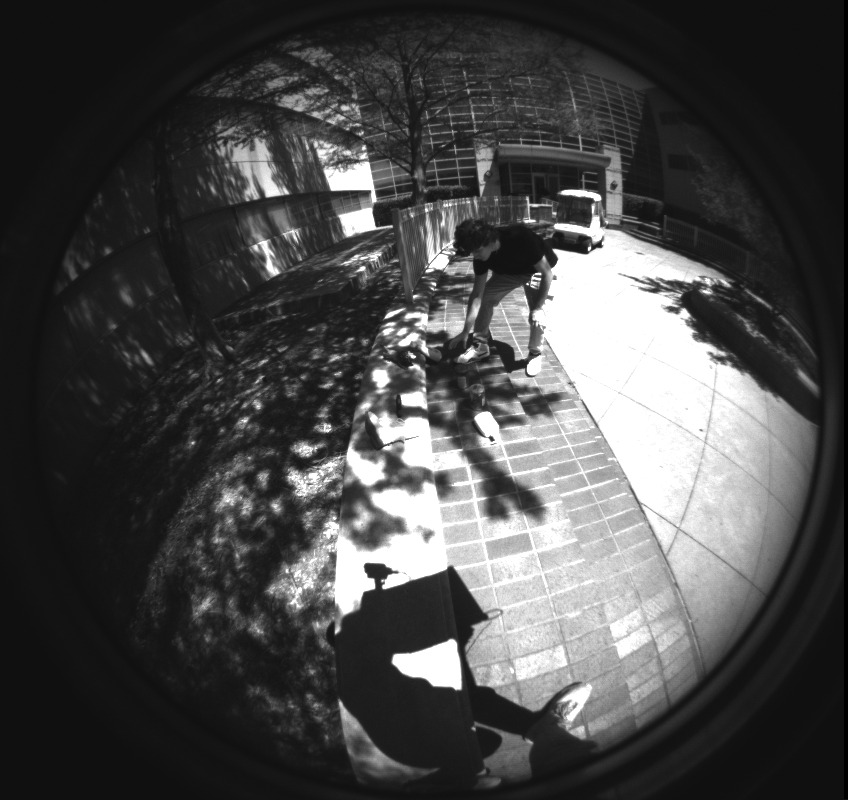
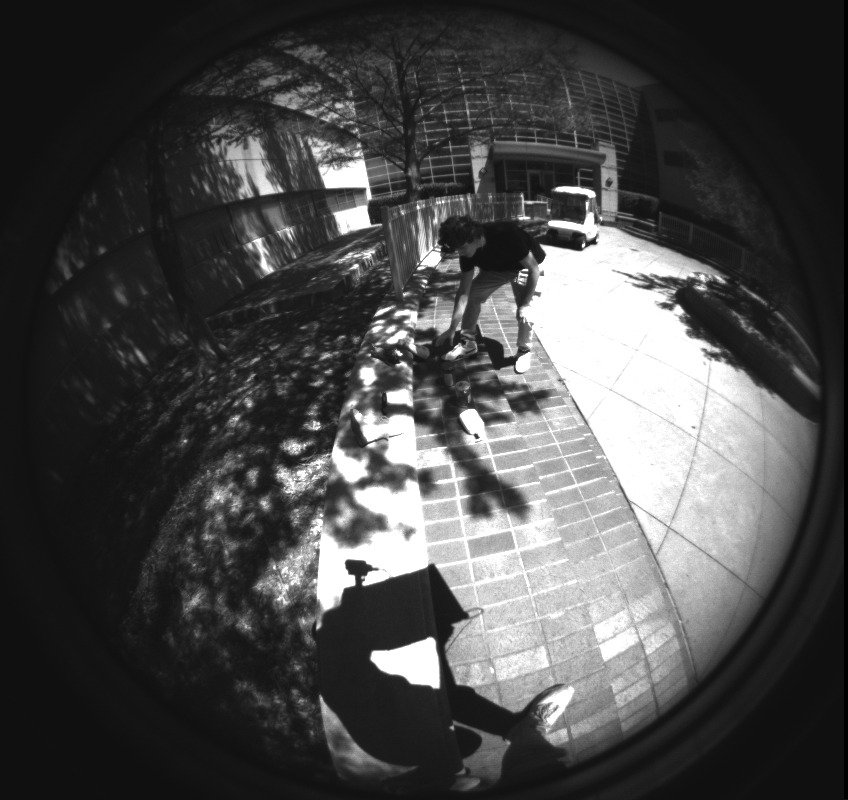
Scene 049, Interaction, frame 00185. The depth image is colorized for display; scoring uses the metric values. The data guide covers each modality and the annotations.
Where to go next
Data tools, batch adapters, visualization and the rest are listed under all capabilities.
Concepts and acronyms
| Term | Meaning |
|---|---|
| MOS, SOS | Multi-object scenes (the 100 benchmark scenes) and single-object captures (the 70 objects, recorded on their own) |
| Phase | Clutter, Interaction or Clean. The egocentric recording of Interaction is a separate view. |
| Easy, Medium, Hard | Difficulty tiers of 33, 33 and 34 scenes, stratified by how much correction each scene's masks needed |
| JEDI, 𝒥, 𝒥min | JEDI (Joint Empirical Desirability Index) combines a task's metrics into one 0–1 quality score per scene and phase. 𝒥 is its mean over all cells; 𝒥min is the mean of the worst phase. |
| Φ | Phase robustness, from a repeated-measures analysis of the paired raw metrics. A model can be robust and still inaccurate, so read Φ next to 𝒥min. |
| GT | Ground truth |
Cite RPX
If RPX is useful in your work, please cite the paper; the BibTeX entry is on the citation page. The toolkit is MIT-licensed and the dataset is CC BY 4.0.